Citing investigations by The New York Times and Al Jazeera, the UK-based research platform highlights alleged foreign amplification of anti-Muslim narratives during the 2026 US elections, particularly against Michigan Senate candidate Abdul El-Sayed.
LONDON, November 6, 2026: Indian-linked bot networks and Hindu nationalist social media accounts were reportedly involved in amplifying hostile narratives against Democratic candidates, particularly Muslim candidates, during the 2026 US midterm elections, according to an analysis published by the UK-based Centre for Evidence and Open-source research platform CENO.
In its November 5 article, The 2026 Midterms: A Democratic Sweep and the Defeat of Islamophobia in Michigan, the CENO Research Desk cited reporting by The New York Times and Al Jazeera that allegedly identified Indian-linked bot networks and Hindu nationalist accounts engaged in coordinated online activity against selected Democratic candidates.
The report also highlighted the role of pro-Israel commentators and organisations in circulating hostile narratives targeting Muslim political figures, particularly Abdul El-Sayed, who, according to the article, defeated Republican Mike Rogers to become the first Muslim elected to the United States Senate.
Indian-linked networks and alleged foreign amplification
According to CENO, digital attacks against Muslim Democratic candidates extended beyond domestic American political groups.
The article states that reporting by The New York Times and Al Jazeera identified Indian-linked bot networks and Hindu nationalist accounts involved in what it described as "shadow-posting" against selected Democratic candidates, particularly those identifying as Muslim.
The report also noted that pro-Israel commentators and organisations actively circulated hostile narratives following the Democratic primary elections.
These allegations suggest that religious identity became a focal point of digital political campaigns involving accounts and networks operating beyond the United States.
However, the CENO article does not provide the underlying datasets, specific account identities or direct links to the cited investigations, leaving the precise scale and coordination of the alleged foreign involvement to be independently established.
Anti-Muslim messaging surged by 1,895%, researchers claim
The report cited research by the open-source intelligence group CSOH, which analysed more than 38,000 social media posts targeting Abdul El-Sayed across platforms including X, Facebook and Reddit.
According to the research cited by CENO, hostile anti-Muslim messaging increased by 1,895% during the first week of August, immediately following El-Sayed's Democratic primary victory.
The narratives reportedly included unsubstantiated allegations connecting the candidate to Hamas, Hezbollah and the Muslim Brotherhood, alongside fabricated claims that he intended to introduce Sharia law in the United States.
CENO also cited Al Jazeera investigations that reportedly traced certain viral attacks to right-wing influencers who circulated selectively edited or out-of-context clips from El-Sayed's speeches.
The article claimed that coordinated secondary accounts and automated networks played a significant role in amplifying the material.
Trump and Republican figures accused of identity-based attacks
The CENO analysis described Michigan's Senate campaign as heavily influenced by religious and ethnic identity politics.
According to the article, President Donald Trump repeatedly used inflammatory language against El-Sayed, including describing him as a "jihadist" and drawing unsupported comparisons with the September 11 attacks.
Republican Senator Ted Cruz was also cited as questioning El-Sayed's suitability to access classified intelligence.
The report stated that attempts were made to associate El-Sayed with the Muslim Brotherhood based on older academic writings and social media activity attributed to members of his extended family.
El-Sayed rejected any association with the organisation, and the article stated that no evidentiary link had been established.
Muslim candidate wins despite intense opposition
Despite the hostile campaign environment described by CENO, Abdul El-Sayed secured victory in Michigan's Senate race, defeating Republican candidate Mike Rogers.
A physician and former public health director in Detroit and Wayne County, El-Sayed campaigned on universal healthcare, the rising cost of living and campaign finance reform.
The report noted that he had previously defeated Representative Haley Stevens in the Democratic primary by approximately 14,900 votes, despite an estimated $70 million in opposing independent expenditures.
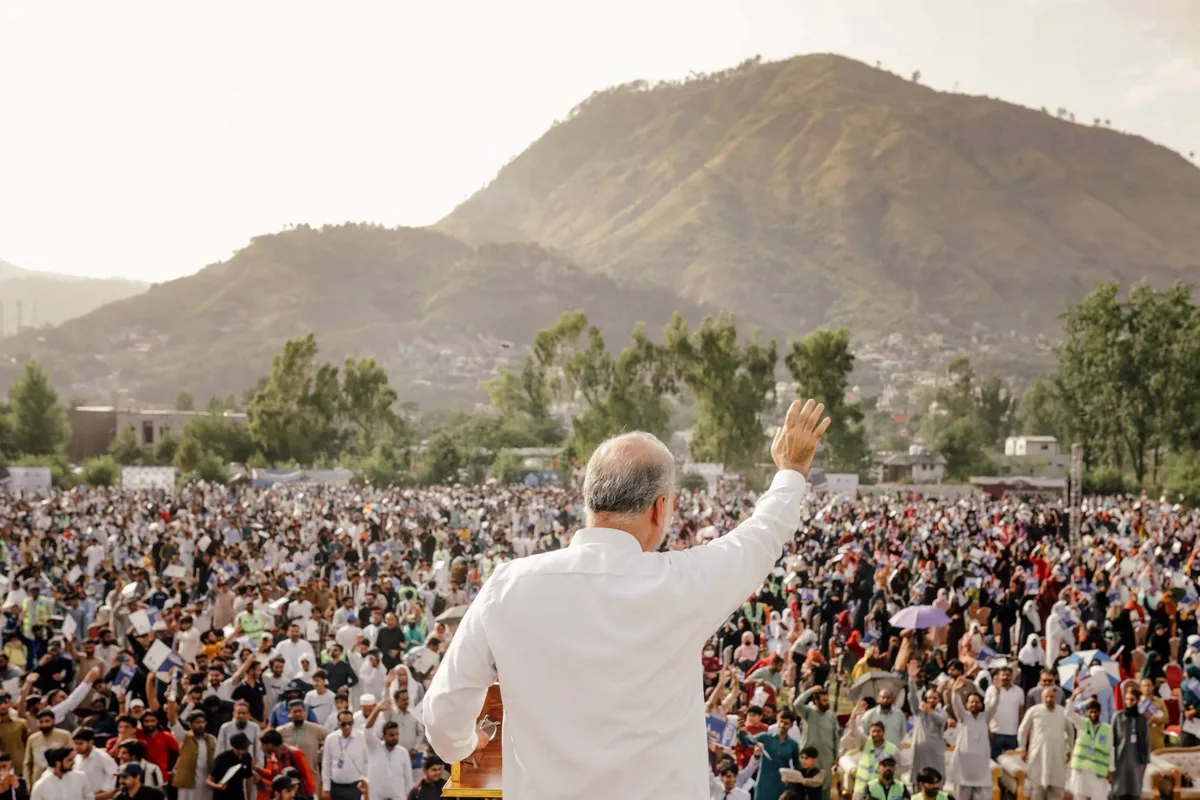
In his victory address, El-Sayed characterised the result as a rejection of divisive politics and attacks based on religious and ethnic identity.
The report also acknowledged that religious identity influenced some voters, while others supported his candidacy on the principle of religious freedom.
Other Muslim and Arab American candidates record victories
CENO presented El-Sayed's election as part of a broader advancement for Muslim and Arab American candidates.
According to the article, Aber Kawas became the first Palestinian American elected to the New York State Senate, while Dr Adam Hamawy, a surgeon with medical volunteer experience in Gaza, was elected as New Jersey's first Muslim member of Congress.
Representative Rashida Tlaib also secured re-election in Michigan.
The report noted that several candidates faced opposition from well-funded pro-Israel lobbying organisations.
Democrats secure control of Congress
Beyond the Michigan contest, the CENO analysis reported that Democrats secured majorities in both chambers of Congress in the November 3 midterm elections.
The article projected that Democrats would hold at least 250 of the 435 seats in the House of Representatives and had flipped a minimum of seven Republican-held Senate seats.
It also cited economic dissatisfaction, the cost of living and opposition to the Trump administration as major factors contributing to Democratic gains.
Vice President JD Vance reportedly linked Republican electoral setbacks to the domestic political consequences of the Iran conflict.
Election outcome raises questions over identity-based campaigning
CENO concluded that religiously charged political attacks and coordinated digital Islamophobia had failed to produce the expected electoral advantages in the 2026 midterms.
However, the analysis cautioned against interpreting the results solely as a rejection of religious prejudice, noting that economic pressures and broader dissatisfaction with the incumbent administration also contributed to Democratic victories.
The findings have renewed questions about foreign-linked digital amplification, online disinformation and the use of religious identity in American electoral politics.
Source: CENO Research Desk, November 5, 2026. Allegations concerning Indian-linked networks, Hindu nationalist accounts and coordinated online activity are attributed to the CENO analysis and its cited investigations; they have not been independently verified for this report.